
Resources
Cancer Information
- Childrens Oncology Group (COG): http://www.childrensoncologygroup.org/
- Latest NIH-NCI Info about all Cancer Types (PDQ): http://www.cancer.gov/cancertopics/alphalist
-
Cancerweb Online Medical Dictionary: http://cancerweb.ncl.ac.uk/omd/
One of the most complete medical dictionaries available on the World Wide Web. -
Cancer Information Network: http://www.cancernetwork.com
Comprehensive Web site for cancer patients and their caregivers. News about cancer updated daily; instant access to treatment guidelines, medical databases, and general information about all kinds of cancer. -
Cancer Information Service: http://www.cancer.gov/newscenter
A nationwide service providing fast access to the latest cancer information for patients, family members, and health care professionals. The information service is a program of the National Cancer Institute. - Cancer Links: http://www.cancerlinks.org
Pediatric Imaging
- Society for Pediatric Radiology: http://www.pedrad.org/
- Online Pediatric Radiology Curriculum: https://www.cchs.net/pediatricradiology/
-
Online website with Pediatric Radiology teaching cases and a free online exam:
http://essentials-of-pediatric-radiology.com/case-studies/case-studies-by-subject/
http://essentials-of-pediatric-radiology.com/case-studies/case-studies-exam/ - Radiological Society of North America: www.rsna.org
- Society for Molecular Imaging: http://www.molecularimaging.org/
-
Radiology Resources for Medical Students:
http://www.bubbasoft.org/
http://www.auntminnie.com/index.asp?sec=def - MRI Teaching File: http://3s.acr.org/mri/
- Radiology information for patients: http://www.radiologyinfo.org/
-
Radiology and MR Safety:
http://www.acr.org/safety
http://www.pedrad.org/associations/5364/ig/
http://www.mrisafety.com/
Stem Cell Imaging
Labeling Stem Cells with Fluorescent Dyes for Non-invasive Detection with Optical Imaging. http://www.jove.com/index/Details.stp?ID=686, J Vis Exp. 2008 Apr 2;(14). pii: 686. doi: 10.3791/686. PMCID: 2582850
Labeling hESCs and hMSCs with Iron Oxide Nanoparticles for non-invasive in vivo tracking with MR imaging. http://www.jove.com/index/Details.stp?ID=685, J Vis Exp. 2008 Mar 31;(13). pii: 685. doi: 10.3791/685. PMCID: 2586865
Implantation of Ferumoxides labeled human Mesenchymal Stem Cells in Cartilage defects. http://www.jove.com/index/Details.stp?ID=1793. J Vis Exp. 2010 Apr 5(38), 2010 pii: 1793. doi: 10.3791/1793, PMCID: PMC2900275
Labeling Stem Cells with Ferumoxytol, an FDA-Approved Iron Oxide Nanoparticle. http://www.jove.com/index/Details.stp?ID=3482. J. Vis. Exp. 2011 Nov 4(57), 2011 pii: 3482. doi: 10.3791/3482, PMCID: pending
Resources for Trainees
-
) Medical Students: http://med.stanford.edu/student_research/
- Radiology clerkships: http://radiology.stanford.edu/education/clerkship.html
-
Research electives:
-
Scholarly concentrations program - required component of MD curriculum: http://med.stanford.edu/md/curriculum/scholarly_concentrations/
MD Students- research elective: 1-4 "quarters" - http://medscholars.stanford.edu/
If funded under the Med Scholars Program, students will receive $14,732 (to cover tuition) plus $2,000 (towards the cost of living), for their first quarter of full research. For subsequent full-time research quarters (second through fifth) students will receive the Research Tuition Rate of $2,874 plus $6,600 for cost of living). -
College students summer research elective: 8-weeks + stipend: http://ssrp.stanford.edu/
American citizens/permanent residents and international students enrolled in U.S., 4-year undergraduate institutions who would bring diversity to graduate study in the biomedical and biological sciences. - High school students: 8 weeks - http://simr.stanford.edu/
-
Scholarly concentrations program - required component of MD curriculum: http://med.stanford.edu/md/curriculum/scholarly_concentrations/
-
Clinical Elective:
- A) Stanford students
See catalogue (http://med.stanford.edu/md/clerkships/) - B) Visiting Medical Students:
3 months clinical clerkships for MD students from US or Canada in their 3rd or 4th year, must have completed USMLE 1 (international students not allowed): http://med.stanford.edu/md/clerkships/
- A) Stanford students
-
) PhD Students
- http://med.stanford.edu/biosciences/
-
) Post-Docs
- http://postdocs.stanford.edu/scholars/
-
) Visiting scholars (recognized experts in their field)
- http://med.stanford.edu/academicaffairs/handbook/chapt9.html
-
) Resources for International students
- http://umartariq.com/
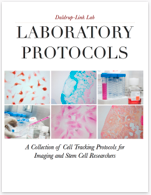
Protocols of the Daldrup-Link Lab:
- (login required) http://stanford.edu/~heiked/cgi-bin/login.php
- Feedback Box: http://stanford.edu/~heiked/cgi-bin/feedback/
Community of Science
- www.cos.com - Most comprehensive funding resource, with more than 25,000 records
- NIH Funding opportunities: http://grants.nih.gov/grants/guide/
- NIH RePorter: http://projectreporter.nih.gov/reporter.cfm
- PubMed: http://www.ncbi.nlm.nih.gov/sites/entrez?db=pubmed